
Following one name in Flanders Fields
How to find where your great-grandfather served in Flanders, and how to visit
Search the CWGC Find War Dead database first: it names his grave or memorial. Then read his service record in your national archives, and plan one Ypres day around it.
Start with the Find War Dead search of the Commonwealth War Graves Commission. If your great-grandfather died in the war, his record names the cemetery where he lies, or the memorial where his name is carved. His service record, kept in the national archives of the country he served, tells you more about his unit. With that one place in hand, you can plan a day in Ypres around him.
Step 1. Find his name in the war dead records
The CWGC Find War Dead search holds the records of the 1.7 million Commonwealth men and women the Commission commemorates. You can search by last name, first name or initials, service number, regiment and the country he served with. Tick First World War to narrow it down.
The search also takes initials, so try those if the full first name gives nothing. His record names the cemetery or the memorial where he is commemorated. Write that line down exactly as it appears. It is what you will look for on the day.
If he served with the American army, look in the ABMC burial search instead. The American Battle Monuments Commission honours more than 200,000 American service members at its sites. In Belgium that is the Flanders Field American Cemetery at Waregem. Almost 400 American war dead rest there, and more than 40 names are on its Walls of the Missing.
Step 2. Find where he served
The war dead records tell you where he is remembered. A service record tells you where he served. Each country keeps its own.
| Item | Where he is remembered | His service record |
|---|---|---|
| United Kingdom | CWGC Find War Dead | The National Archives in Kew. Most records of soldiers were destroyed by bombing and fire. The surviving ones are on two subscription sites. |
| Ireland | CWGC Find War Dead | The UK National Archives. The National Archives of Ireland also hold over 9,000 wills of Irish soldiers who died in the British Army, all online. |
| Canada | CWGC Find War Dead, and the Canadian Virtual War Memorial | Library and Archives Canada: about 622,000 service files, almost all online. |
| Australia | CWGC Find War Dead, and the Australian War Memorial Roll of Honour | The National Archives of Australia: First World War army records can be viewed online. |
| New Zealand | CWGC Find War Dead, and Online Cenotaph at Auckland Museum | Archives New Zealand: over 140,000 First World War files, open to view and download. |
| United States | ABMC burial search | Start with the burial search. At Flanders Field, staff take relatives to the grave. |
| What to write down | The cemetery or memorial, exactly as in his record | His unit and his dates |
The official pages:
- The National Archives (UK)
- National Archives of Ireland soldiers’ wills
- Library and Archives Canada
- Canadian Virtual War Memorial
- National Archives of Australia
- Australian War Memorial
- Archives New Zealand
- Online Cenotaph
Step 3. Ask the two research centres in Flanders
Two museums in and near Ypres collect the stories of the men who died here.
The In Flanders Fields Museum in Ypres keeps the List of Names. It is a register of the war victims of this corner of Belgium, soldiers and civilians, of every nationality, former allies and enemies alike. You can add photos or documents about a person on the list. The museum’s research centre works on weekdays. Send your question through its contact form well before your trip.
The Passchendaele Museum in Zonnebeke runs the Passchendaele Archives. Its aim is to give a face and a story to the men who fell in the Battle of Passchendaele. If your family has a link to one of them, the museum opens a file on him. It starts from a questionnaire you fill in, with letters and photos if you have them.
Step 4. Plan one day around that name
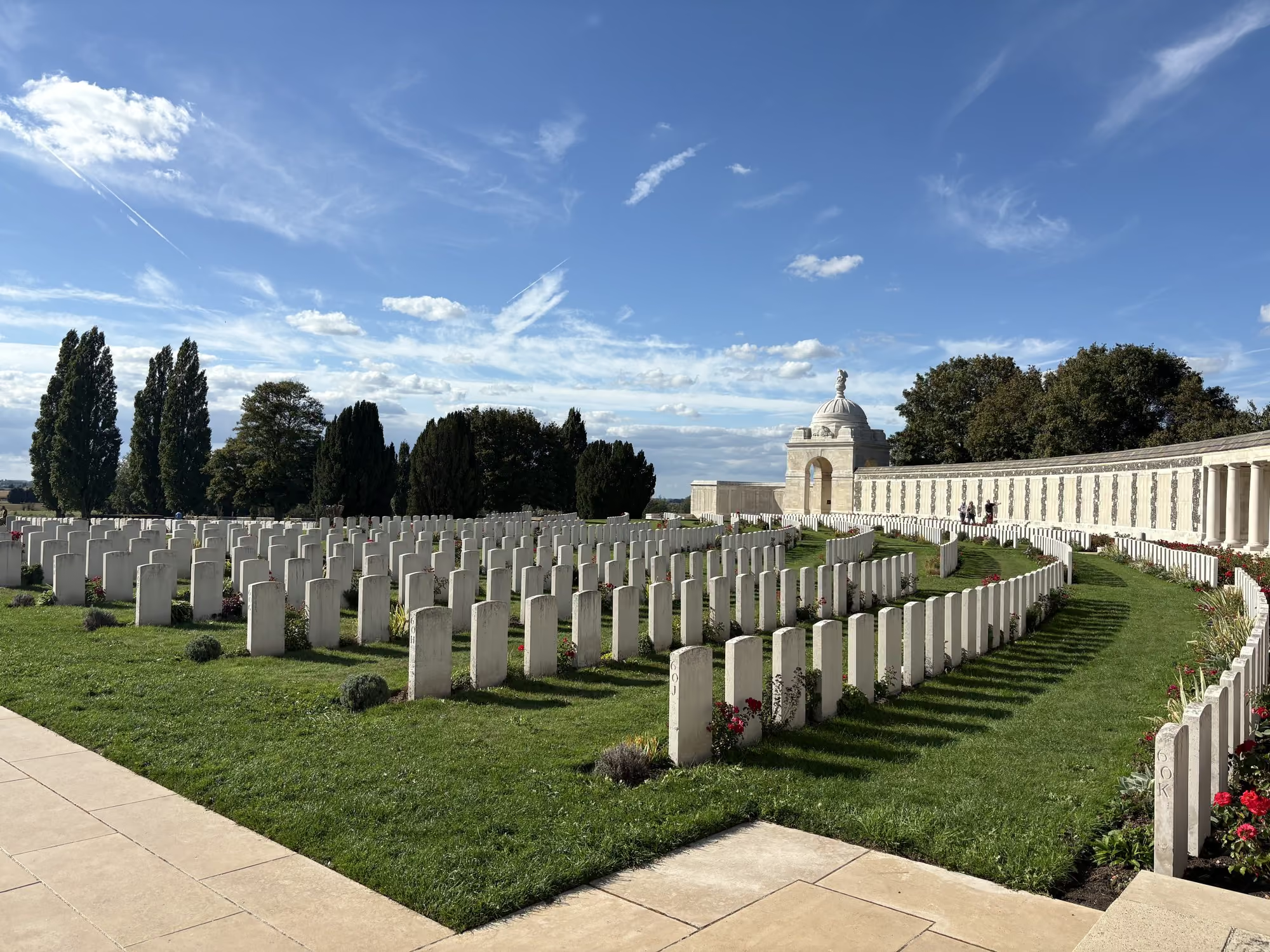
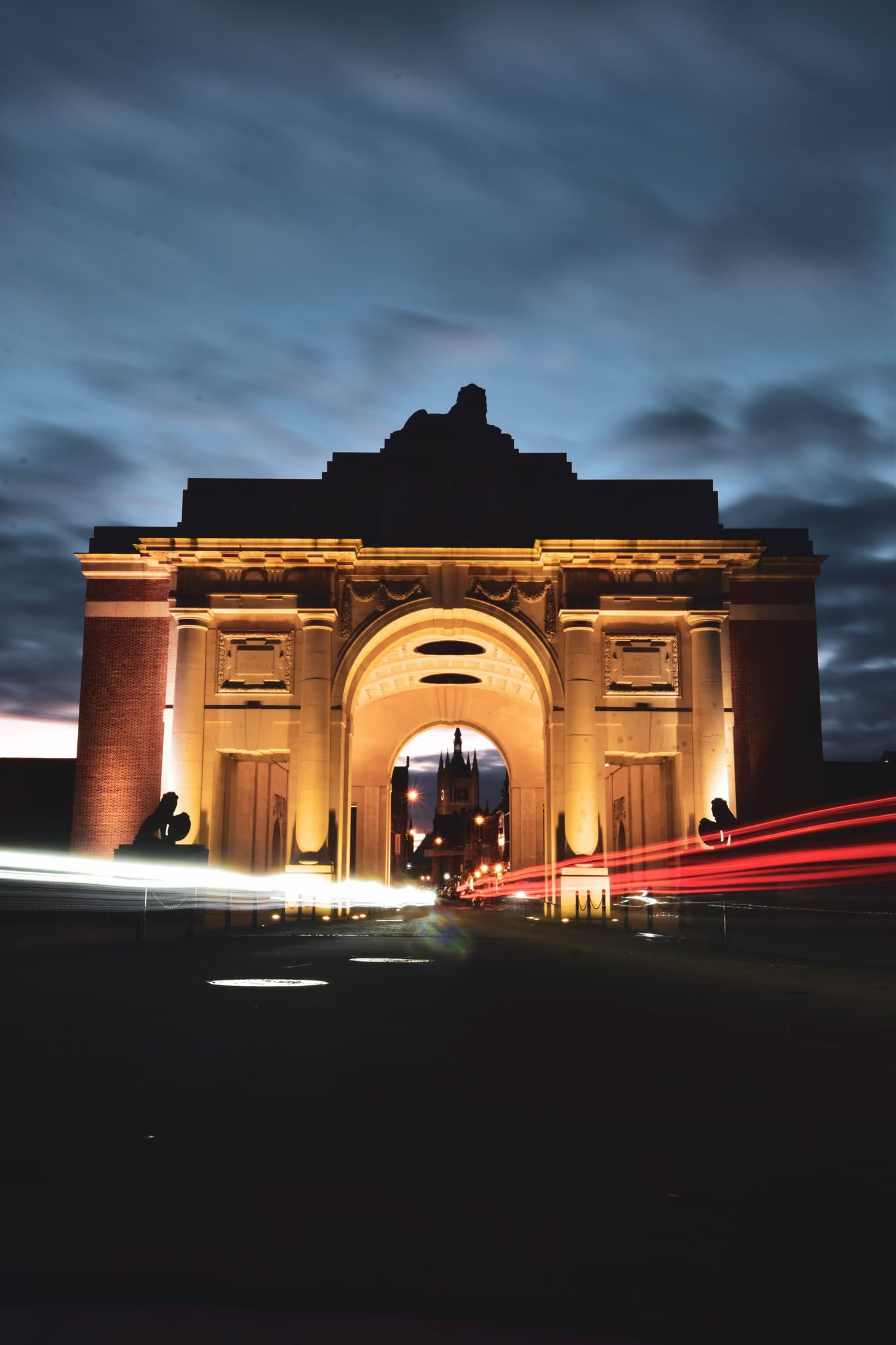
The Menin Gate carries the names of more than 54,000 Commonwealth soldiers of the Ypres Salient who have no known grave. Soldiers from the United Kingdom and New Zealand who died after 16 August 1917 are named on the memorial wall at Tyne Cot instead. So the record from step 1 tells you which of the two to look at.
At Tyne Cot, the cemetery register is in the gatehouse. The register of the memorial is in the left-hand rotunda as you face the wall. Next to the Menin Gate, the CWGC visitor centre at Menenstraat 46 helps you find a name.
Then fix the evening. The Last Post sounds under the Menin Gate every evening at 20:00, and has done since 1928, with one break during the German occupation. On our Ypres day, almost everything can move. The Last Post cannot, so I plan the day backwards from eight in the evening.
How we run an Ypres day with a family name
Before an Ypres day, I ask our guests one question. Did a family member serve in Flanders, with a name we could look for? Kim K. and Donna K. from Australia had no name like that, and they came anyway.
If you have a name, send it to me when you book, and I check the records before the day. At Tyne Cot, before we leave, I tell you what I found.
Our rule for the day is short: names work, casualty totals do not. At Tyne Cot I say less, and I wait at the gate. If guests ask what to look for, I say one thing: read the ages.
One guest found his grandfather at Tyne Cot. It was a very emotional moment.
Who this day does not suit
On the day, I do not give you regiment numbers and troop movements. The archives in step 2 and the two research centres in step 3 do that work far better than a guide on the day. Do the reading before you come, and the day becomes about the place.
If his record points to a cemetery in France, an Ypres day is the wrong day. Check the country in his record first.
It is a long day. With the Last Post, you are back in Ghent around 21:30, or in Brussels around 22:00. The museum at Hill 62 is closed on Mondays, and its trenches are uneven ground.
When we bring descendants to Ypres
Our Ypres day runs year-round on request, guided by me or a hand-picked partner guide. If you have a name, or only a family story, tell us about him and your dates on the private page.
What would a day like this cost today? Read what a private day in Belgium costs, and what is in it.
An Ypres day around one name
We pick you up at your door in Brussels, Ghent, Antwerp, Bruges or anywhere else in Belgium. Our Ypres day ends with the Last Post at the Menin Gate, with lunch, dinner and drinks throughout. Tell us the name you are looking for and your dates on the private page, or write to hello@belgiumswanderlust.be. Days run year-round on request, and you get a personal reply within 24 hours.
Plan Your Day