
A family roots day in West Flanders
A roots day from Zeebrugge: two family villages, a castle picnic and Bruges
Cynda C. had one port day in Belgium. We spent it in the two West Flemish villages her family left, at a picnic by a castle, and in Bruges with a partner guide.
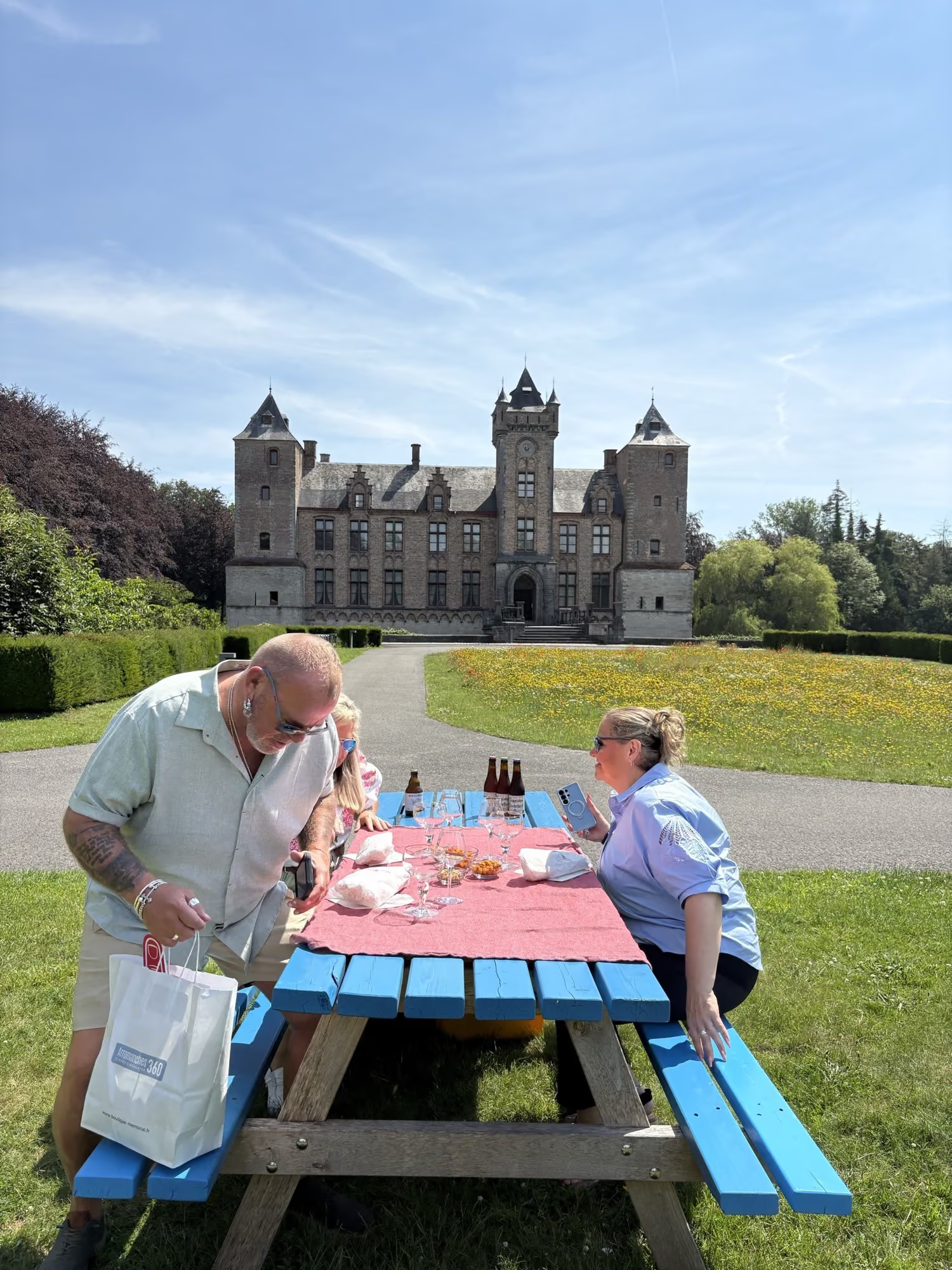
Last Sunday I picked up Cynda C. at the gangway in Zeebrugge. She was on a cruise, with one day in port, and she came with her sister Tricia and with Darren. The three of them live in the Kansas City area. Cynda wanted to see where her family came from.
One side of the family came from Meulebeke, the other from Aarsele, two West Flemish villages a short drive apart. Her grandparents were both immigrants. They only met after they had arrived in the Kansas City area.
What she asked for
Cynda’s first message named Tielt and Meulebeke. I asked what else she wanted. She said this might be their only visit, so the highlights would be great. Quieter, lesser-known places were welcome too.
A cruise call sets hard limits. Her ship was in port at nine, and the three of them had to be back on board by about half past four. So I planned the villages in the morning and Bruges in the afternoon, with pickup at 09:15 and the gangway again by 15:50. Tielt was on the first plan too. Cynda asked for both a canal boat and a chocolatier in Bruges, so Tielt had to give way.
Three weeks in the archives first
I made her one promise up front, in my mail of 13 May. I could not promise what records had survived. But if I found something, we would go over it at the church where it belongs.
Then I started digging. I wrote to the state archive in Bruges, the heritage society in Tielt and a heritage contact in Meulebeke. I ran what I found past a few people I trust on West Flemish family history. On 12 June Cynda got fourteen pages on both family lines, written as a story rather than a register.
Her answer came the same evening. She was in awe of what I had put together.
She sent me old family photos and documents too. On the day she brought the real thing: her great-grandfather’s US passport from 1947, the year he came back to Belgium for a visit. That morning I read the story I had written for her one more time. I almost cried.
Meulebeke and Aarsele, the family ground
Our first stop was Meulebeke, with its church of Sint-Amandus and the village square. At the cemetery the three of them found graves with family names on them.
Aarsele is about fifteen minutes away by car. This was the other side of the family, with the church of Sint-Martinus at its centre.
Two families from villages this close, and they only met on the other side of the ocean. That was the story of the morning.
A picnic at a castle, as a surprise
The guests did not know about lunch. I had kept it quiet on purpose. Instead of a restaurant in Bruges, I set up a picnic in the park of Kasteel Tillegem, just outside the city. I found the spot myself.
A restaurant you can find anywhere. On these days the point of lunch is the tasting. We share a few Belgian beers at one table, and I tell why beer runs so deep in this country. We had about forty minutes there. To keep it from feeling rushed, I had asked Andrew, the guide in Bruges, to start a little later.
The next day Cynda wrote that the picnic at the castle had been a complete surprise.
Bruges with Andrew
In Bruges I handed the group to Andrew, a partner guide I work with a lot in that city. He knows its history better than I do. While he started the walk, I parked the car, then caught up with them.
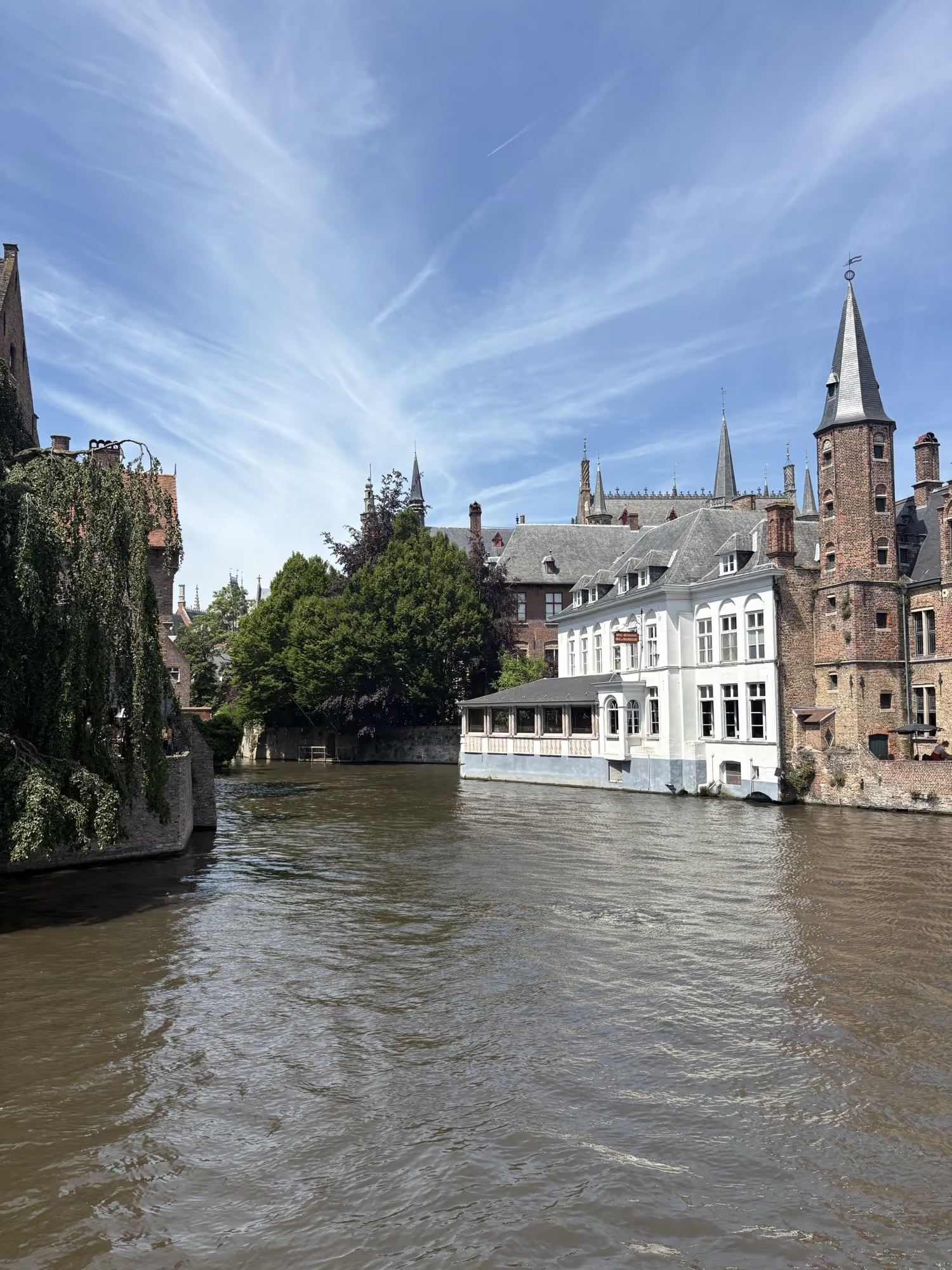
Andrew took them through the centre, to a chocolatier and onto a canal boat. We did the boat last. The line at the boats was long that afternoon, so I went ahead to get a place.
A gift at the gangway
On the drive back to Zeebrugge I gave them a small gift. It was a set of glasses from my brother’s beer, Nen Echten, and a handwritten card with a picture of the church in Aarsele. The next day Cynda wrote that the gifts meant more to them than anything they could have bought on the trip.
We made it back to the ship in time. Two days later she wrote that a cousin had texted her. She thought he might be the first of several to plan a visit.
A day like this
This kind of day suits families who know the village their people left. It works from a cruise ship too. A port call gives you a fixed window, and the day is built backwards from the time you must be on board.
It does not suit everyone. Records do not always survive, so I do not promise a grave or a house. The research takes weeks, so write early: Cynda first wrote about six weeks before her day. And a port day is short. Something has to give, and here it was Tielt.
What would a day like this cost today? Read what a private day in Belgium costs, and what is in it.
If your family left a Flemish village, see how a Belgian Roots Day works.
Looking for the village your family left?
This was a private day we built around one family and one port call. Pickup at your door in Brussels, Ghent, Antwerp, Bruges or anywhere else in Belgium, or at the gangway in Zeebrugge. Lunch and drinks throughout, one party per day. A Belgian Roots Day starts with research on one family line, then a private day in the village the records name. Days run year-round on request, and you get a personal reply within 24 hours.
See the Belgian Roots Day