Neuhaus, in Dinant and Ghent
Neuhaus: the Swiss pharmacist who gave Belgium the praline
A Swiss pharmacist, a grandson and a box: how Neuhaus invented the Belgian praline in 1912 and the ballotin in 1915, and why we stop at its shops in Dinant and Ghent.
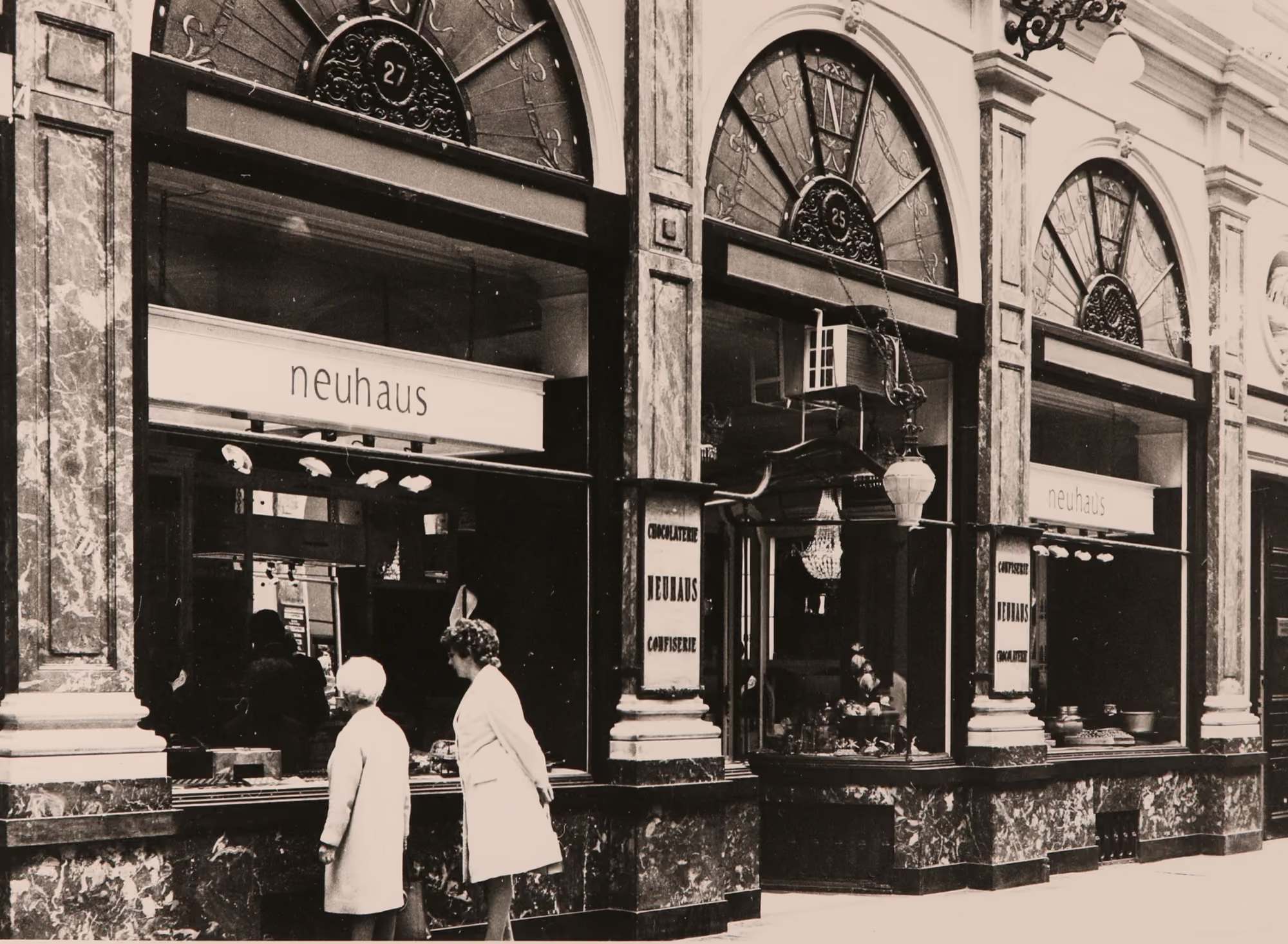
The Belgian praline and the box it comes in, the ballotin, were both invented by one family, in one shop, in Brussels. That family was Neuhaus, and the man who started it was not Belgian at all. He was Swiss.
On our days we stop at two Neuhaus shops: in Dinant on the Meuse, and in Ghent on the cathedral square. This is the story I tell on the way in.
A Swiss pharmacist who could not stand blood
Jean Neuhaus wanted to be a doctor. According to Neuhaus’s own history, he studied medicine in Grenoble and failed twice, mainly because he could not bear the sight of blood. So he became a pharmacist instead.
In 1857 he settled in Brussels and opened a pharmacy in the Galerie de la Reine. The gallery itself was only ten years old. The Galeries Royales Saint-Hubert opened ten years earlier, on 20 June 1847, and they are among the oldest covered shopping arcades in Europe.
His trick was simple. To please his customers, he covered his medicines with a thin layer of chocolate. Next to the medicine he sold fine sweets, and the sweets slowly took over his life.
What Switzerland gave chocolate
The Swiss founder also helps with an old question: is Swiss or Belgian chocolate better?
Here is how I answer it. Switzerland made chocolate smooth and milky. According to Chocosuisse, the Swiss chocolate industry body, François-Louis Cailler opened one of the first mechanised chocolate factories near Vevey in 1819. Philippe Suchard followed in 1826, near Neuchâtel. In 1875 Daniel Peter, in Vevey, found how to combine chocolate with milk. In 1879 Rodolphe Lindt developed conching in Bern, which gave the world the first chocolate that melts in your mouth.
There is a second pharmacist in that story. Daniel Peter made his milk chocolate with condensed milk from Henri Nestlé, and Nestlé was a pharmacist too.
Belgium did something else with chocolate. It turned it into a gift: a filled praline, in a box made to protect it. That is my own summary of the dates, not a line from either side. But by the time a Neuhaus filled his first chocolate in 1912, smooth Swiss chocolate already existed. A Swiss family in Brussels took the next step.
1912: the grandson drops the medicine
In 1912 the founder’s grandson, Jean Neuhaus Jr., took his grandfather’s idea one step further. In the same shop in the Galerie de la Reine, he replaced the bitter medicine inside the chocolate with a sweet filling. Neuhaus calls it the first Belgian praline.
The word means different things in different places. In Belgium a praline is a chocolate shell with a soft centre. In France the first pralines were almonds cooked in sugar. In New Orleans a praline is a pecan candy. Neuhaus even keeps a separate word, praliné with an accent, for its paste of nuts and caramelised sugar.
Chocolate filled with delight instead of medicine.
That is how Neuhaus itself describes the first praline.
1915: Louise and the ballotin
Three years later a problem appeared at the counter. Customers carried their pralines home in paper cones, and the chocolates were crushed or melted on the way.
Louise Agostini, the wife of Jean Neuhaus Jr., solved it in 1915. She designed an elegant box to protect the pralines and show them well: the ballotin. It celebrated its 100th birthday in 2015. For its 110th, in 2025, Neuhaus published a book, “Neuhaus, Inventor of the Belgian Praline”.
The family kept the names alive. Neuhaus sells a praline called Jean, after the inventor, and one called Louise, after the designer of the ballotin.
1958: a world fair and a triangle
In 1958 Brussels hosted the world fair, Expo 58. Adelson de Gavre, son-in-law of Jean Neuhaus Jr., was leading the house. For the fair he created two new pralines, the Caprice and the Tentation.
The Caprice is a folded nougatine shell, filled with vanilla cream from Madagascar and covered in dark chocolate. The Tentation holds a coffee ganache made with Arabica, covered in milk chocolate. Together they became the first of the Irrésistibles, known for their triangle shape. In April 2026 the family grew to ten, with Sensation, the first vegan one.
Still made by hand, just outside Brussels
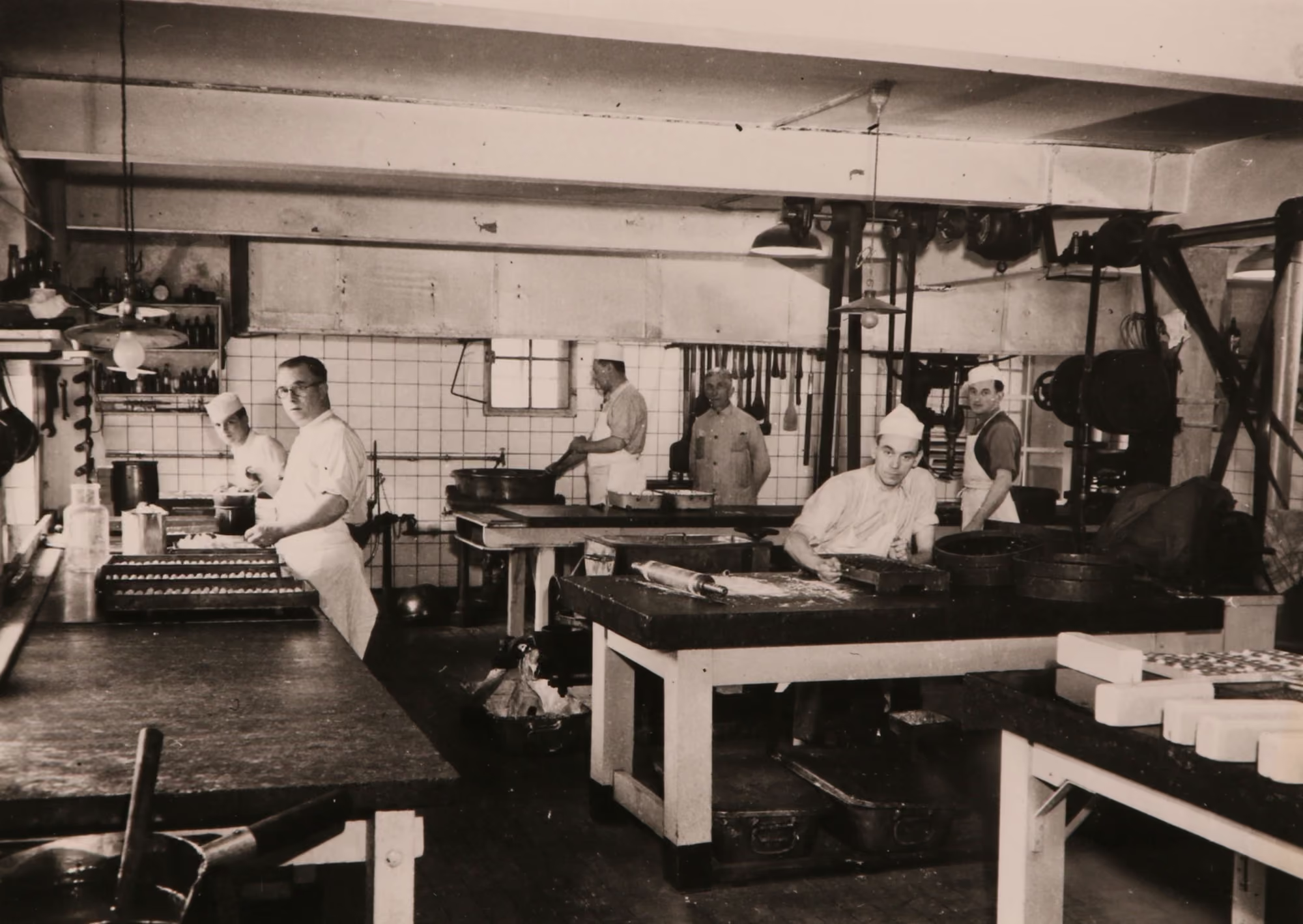
All Neuhaus pralines are still made in one atelier, in Vlezenbeek, just outside Brussels. Some of the work there is still done by hand, and Neuhaus names the people who do it.
The nougatine for the Irrésistibles is made by melting sugar in copper kettles. Fiorella fills the nougatine shells by hand, and her mother has worked in the same atelier for more than fifteen years. Elisabeth, there since 1991, makes the Manon Sucre by hand, a skill that takes more than three weeks of training. Jana ties the hand-made knots that close the boxes.
Neuhaus says its cocoa is 100 percent sustainably sourced, partly from a cacao farm it invested in in the Guayaquil region of Ecuador. All its chocolates are palm oil free. Details are on its Honest Chocolate page.
Chocolate for the royal court
Neuhaus is a warrant holder of the Belgian court. In its own words, it has served the royal household for several decades. It has made pralines for royal moments. The Albert was created for the wedding of Prince Albert, later King Albert II, to the Italian Paola. In 2013 Neuhaus marked the crowning of King Philippe and Queen Mathilde with two pralines named after them.
Why we stop in Dinant
Our day around Dinant starts at Château de Walzin, with coffee, tea, Belgian cookies and chocolate by the river. That chocolate comes from the Neuhaus shop in Dinant. Guests have told us that talking over the cookies, the chocolate and the beer was one of the best parts of their day.
The shop is on Rue Adolphe Sax, named after the inventor of the saxophone. Adolphe Sax was born in Dinant in 1814 and patented the saxophone in 1846. Neuhaus itself lists the saxophone next to the praline and the ballotin as Belgian inventions. In Dinant you can stand on the street of one and taste the other.
Why we stop in Ghent
In Ghent the shop is at Sint-Baafsplein 22-24, on the square of St Bavo’s Cathedral, home of the Ghent Altarpiece. We pass it on our days in Ghent, on the Brewers’ Day, and on any day that starts or ends in the city. Ghent has four Neuhaus shops, and this is the one we use.
What guests do there
Most guests do three things. They taste one praline on the spot. They buy a box to take home. And they ask about the story, which is why this article exists.
I think it is always worth the stop. The only catch is the calendar: the Dinant shop is closed on Mondays.
If you are in Brussels with a free hour, go to the source. The first shop is still in the Galerie de la Reine, at number 25-27. Next door, at number 29, the Neuhaus Atelier runs praline workshops with a Maître Chocolatier. Neuhaus also runs a chocolate mousse bar in the same gallery.
In 2027 Neuhaus turns 170. Not bad for a pharmacy.
If you would like a day in the Meuse valley or around Ghent with this stop on it, tell us your dates.
Rather not plan it yourself?
The Neuhaus shop is part of our day around Dinant and the Meuse valley, and of our days in and around Ghent. Pickup at your door in Brussels, Ghent, Antwerp, Bruges or anywhere else in Belgium. Tell us your dates and we build the day around you. Days run year-round on request, and you get a personal reply within 24 hours.
Plan Your Day